WHAT IS TEMPOROMANDIBULAR JOINT (TMJ)?
Temporomandibular joints connect the jawbone to the skull. It is an articulation, synovial in nature, between the skull and the mandible (Lower Jaw). Its main function is lower jaw movement.
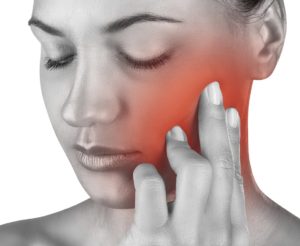
WHAT IS TEMPOROMANDIBULAR DISORDER (TMD)?
A disease related to the jaws and its joints which might include the muscles of your face is known as TMJ disorder.
WHAT CAUSES TEMPOROMANDIBULAR DISORDER (TMD)?
A heavy blow during a fight/sports, clenching/grinding of the teeth, dislocation of the disc, arthritis, improper occlusion/bite, a developmental defect, improper fusion of fractured jaw bone, or trauma might cause TMD.
WHAT ARE THE SIGNS AND SYMPTOMS OF TEMPOROMANDIBULAR DISORDER?
– Difficulty Chewing.
The patient might experience pain in the ear, jaw or face.
– There might be difficulty in opening/closing of the jaws, in chewing.
– Muscle spasms and clicking sounds in the joints.
– Joint locking may be present.
– Other Symptoms: Headache, Pain in the neck or shoulders, A tired feeling in your face, ringing in your ears, Swelling on the side of your face.
WHY IS EARLY TREATMENT RECOMMENDED?
– The damage is irreversible, hence earlier the treatment, lessen the damage. An early treatment prevents a chronic disorder.
– Another major concern is the cost factor. Once the pain is neglected and TMD reaches an advanced stage, joint replacement becomes crucial, which is extremely expensive.
HOW IS TMD DIAGNOSED?
– Clinical Evaluation: is done in order to locate the areas of pain, discomfort or for clicking sound.
– Radiographic evaluation: might be done as well in order to locate the changes in the jawbone and joints (eg. X-ray, CBCT, MRI).
– Arthroscopy: is used for diagnosis, at times, during which the doctor inserts a cannula in the joint space, followed by the insertion of a small camera known as an arthroscope in order to view the affected area and arrive at a diagnosis.
WHAT IS THE TREATMENT OF TMJ DISORDER?
Treatments range from simple self-care practices and conservative treatments to injections and open surgery. Most experts agree that treatment should begin with conservative, nonsurgical therapies, with surgery left as the last resort.
> Restrictions: Avoid extreme jaw movements.
> Medications: Pain relievers, anti-inflammatory drugs, muscle relaxants, Trigger point injections.
> Oral splints/ mouthguard.
> Physiotherapy: Exercises for strengthening and relaxing jaw muscles.
> Therapy: Transcutaneous electrical nerve stimulation (TENS), Radio Wave Therapy, Laser Therapy, UltraSound.
> The last resort is surgery. It includes arthrocentesis (This minor procedure is performed in the office, usually under local anesthesia), open-joint surgery.
WHY TEETH CARE CENTRE?

TCC comprises of highly qualified dental specialists and master degree holders offering comprehensive treatment of TMJ. Teeth Care Centre has a TMJ Specialist who has earned the Masters degree in Oral and Maxillofacial Surgery, and has been a TMJ Arthroscopy and Total Joint Replacement Resident and has been trained for the same from Austria and Germany. Our specialized doctor offers a treatment best suited for the patient after evaluation of all the prospects.
Testimonial:

Contact Us:
Teeth Care Centre
2nd Floor, Pushpak66, Near Someshwar Jain Temple, 132ft Ring Road, Satellite, Ahmedabad 380015, India.
Call: +917878783384
http://www.teethcarecentre.com/contact
When Jaw Pain Is Not Just a Dental Problem: A Broader Approach to TMD Care
Temporomandibular Joint Disorder – Best TMD Specialist in Ahmedabad requires careful assessment because jaw pain can have several possible causes and may not always originate solely from the teeth or jaw joint. Patients with TMD can experience facial pain, jaw stiffness, clicking, limited mouth opening, headaches, ear-related discomfort, or pain while chewing. Similar symptoms can sometimes occur with dental infections, sinus problems, neurological conditions, or other medical issues, which is why accurate diagnosis is important. A TMD specialist begins with a detailed history that considers when symptoms started, what triggers them, and whether they occur during chewing, waking, speaking, or stressful situations. The examination may assess jaw opening, movement patterns, joint sounds, muscle tenderness, bite relationships, and signs of tooth wear. Imaging is not required for every patient, but appropriate X-rays, CBCT, or MRI may be considered when the clinical findings suggest a structural joint problem. Current approaches generally favor conservative management before irreversible procedures are considered. Patients may be advised to temporarily reduce very hard or chewy foods and avoid habits such as excessive gum chewing or intentionally clicking the jaw. Heat or cold therapy, prescribed medication, physiotherapy, and gentle jaw exercises may be recommended depending on the diagnosis. Stress and sleep quality also deserve attention because clenching and grinding can increase muscular tension and aggravate symptoms. Some patients benefit from a customized oral appliance, particularly when nighttime grinding is contributing to discomfort. However, an appliance should be professionally evaluated rather than purchased solely from an online source. Persistent or worsening symptoms require reassessment because treatment needs can change over time. Surgical treatment is generally reserved for selected cases involving significant structural joint disease or symptoms that do not respond adequately to appropriate conservative care. Patients should also be cautious about claims that one irreversible bite adjustment can cure every form of TMD. Temporomandibular Joint Disorder – Best TMD Specialist in Ahmedabad emphasizes accurate diagnosis, conservative treatment, patient education, and individualized follow-up rather than relying on a single universal solution. This broader approach helps identify the likely source of symptoms while protecting healthy teeth, muscles, and jaw structures from unnecessary treatment.