Myths: The Dental Edition – Separating Facts from Fiction

When it comes to oral health and hygiene, myths and misbeliefs have a way of sticking around. Whether passed down through generations or passed through the grapevine, dental myths can lead to confusion and even misguided dental practices, so it is important to be aware of the actual facts. In every corner of the world, cultural beliefs and traditions shape how people perceive and approach dental care. While some of these beliefs are steeped in centuries-old practices, others have arisen due to misconceptions that have been perpetuated over time. For anyone considering dental treatment Ahmedabad, understanding the truth behind these myths becomes even more important for making informed decisions.

Some Of The Most Common Myths Are:

  • Teeth Cleaning leads to removal of teeth enamel:

This is the biggest myth in dentistry. Teeth Cleaning also known as Scaling involves removing plaque, tartar, and stains, accumulated on the surface of the tooth, with the help of specialized hand or ultrasonic instruments, which improves gum health. Due to this myth, many people don’t get the routine teeth cleaning which is ideally recommended every 6 months, including professional teeth cleaning in Ahmedabad, and have deteriorated gum health.

  • Chewing Sugar-free gum is equal to Brushing:

Sugar-free gum can provide a temporary boost in saliva production, which helps neutralize acids and wash away food debris. However, it’s not a substitute for the thorough cleaning provided by brushing and flossing. Chewing Gum doesn’t remove plaque or prevent tartar buildup, and neglecting your brushing routine can lead to cavities and other dental issues.

  • Whitening Toothpaste can whiten teeth instantly:

Whitening toothpaste can help remove surface stains and slightly brighten teeth over time, but they are not as effective as professional whitening treatments. Stubborn stains and discoloration often require the expertise of a dentist to achieve noticeable and lasting results.

  • I need a Dentist only when my Teeth Hurts:

Dental problems often start silently, with no obvious symptoms in their early stages. Regular dental check-ups are essential for detecting issues like cavities and gum disease before they progress to more painful and costly stages. Prevention is always better than cure than waiting for discomfort to appear.

  • Brushing Harder gets you cleaner teeth:

Brushing your teeth vigorously with excessive pressure and with improper brushing technique (horizontal brushing) can actually harm your teeth and gums. It can lead to enamel erosion, gum recession, and tooth sensitivity. A gentle yet thorough brushing technique is more effective in removing plaque without causing damage.

  • Milky teeth don’t matter, they are going to fall anyway:

Baby teeth play a crucial role in a child’s oral development. They help with speech, and proper chewing, and guide the eruption of permanent teeth. Neglecting baby teeth can lead to early cavities, infections, and misalignment issues that could affect the development of permanent teeth.

  • Flossing can lead to spaces in between teeth:

Flossing your teeth helps to remove the food particles and the plaque from between the tooth surfaces, where the routine toothbrushes cannot reach and clean. Without Flossing there can be cavity formation and gum problems over time.

  • Aspirin can relieve my toothache permanently:

Placing aspirin directly on a toothache is not recommended and can actually damage your gums and other oral tissues. If you’re experiencing tooth pain, it’s best to consult a dentist to identify the underlying cause and receive appropriate treatment.

  • Chewing Betelnut for stronger teeth:

In various Asian countries, including India and some Southeast Asian nations, chewing betel nut is a common practice. Locals believe that chewing betelnut, often wrapped in a betel leaf, can strengthen teeth and prevent decay. However, the reality is that betel nut is acidic and can erode tooth enamel, leading to more dental issues over time and can cause pre-cancerous conditions in the mouth.

Why Choose Teeth Care Centre?

At Teeth Care Centre, we believe in providing the most accurate and honest opinion for your dental issues. Best dentist in Ahmedabad Dr. Pankti Patel she is the Chief Dentist of Teeth Care Centre believes in debunking all the myths and providing you with her unbiased opinion for all your dental concerns.

Dental myths can be incessant, but relying on evidence-based dental practices and expert dental professionals is crucial for maintaining optimal oral health. Instead of falling for myths that might compromise your smile, consult a dental professional for accurate advice and proper care. Remember, your oral health is an investment that pays off in the form of a confident and healthy smile.

When Is An Inlay Or Onlay Preferred?

When there is a damaged or decayed tooth, dental restoration becomes crucial to preserve both function and aesthetics. In such cases, dentists often recommend either inlays or onlays as treatment options. Understanding the differences between these two procedures and their respective advantages can help patients make informed decisions about their dental care.

 What are Inlay and Onlay?

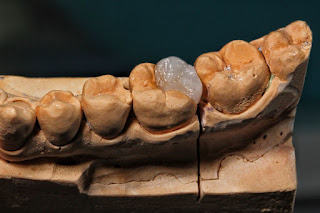
Inlays and onlays are types of indirect dental restorations, meaning they are fabricated outside the mouth and then bonded to the prepared tooth. They are used when a tooth has moderate to extensive damage that cannot be resolved with a simple filling but does not require a full crown.

Inlays are typically used when the damage or decay is confined within the cusp of the tooth.

Onlays, sometimes referred to as partial crowns, are used when the damage extends to one or more cusps of the tooth or covers more surface area.

Both inlays and onlays are custom-made to fit the specific dimensions of the prepared tooth, ensuring a precise and comfortable fit.

When is an Inlay Preferred?

Inlays are preferred in situations where the damage or decay is limited to the central portion of the tooth, within the cusps. This method preserves more of the natural tooth structure compared to a traditional filling and provides a stronger, more durable restoration. Key advantages of choosing an inlay include:

  • Conservation of Tooth Structure:

Inlays require minimal removal of tooth structure compared to crowns, making them a conservative option.

  • Strength and Durability:

Inlays are fabricated from strong materials such as porcelain or composite resin, offering excellent longevity.

  • Aesthetics:

Inlays can be colour-matched to blend seamlessly with the natural tooth, providing a more aesthetically pleasing result.

When is an Onlay Preferred?

Onlays are recommended when the damage extends beyond the cusps of the tooth or covers a larger surface area. This type of restoration provides additional coverage and support compared to an inlay. Key advantages of choosing an onlay include:

  • Extended Coverage:

Onlays can repair and protect more extensive damage, including fractured cusps or larger areas affected by decay.

  • Strength and Stability:

By covering a larger portion of the tooth, onlays offer enhanced strength and stability, reducing the risk of further damage.

  • Preservation of Tooth Structure:

Like inlays, onlays preserve more of the natural tooth structure compared to crowns while providing significant restoration.

In summary, the choice between inlays and onlays depends largely on the extent and location of the tooth damage or decay. Inlays are preferred for more localized damage within the cusps, offering conservative treatment with excellent durability and aesthetics. Onlays, on the other hand, are chosen when the damage extends to multiple cusps or covers a larger area, providing extended coverage and strength.

At Teeth Care Centre the best dental clinic in satellite, Dr. Pankti the dentist doctor in Ahmedabad is skilled and experienced, she helps  you to cease the dental problems before their onset and does the most precise teeth treatment in Ahmedabad.  

Aesthetic And Tooth Coloured Cavity Filling in Ahmedabad

Untitled

What is Tooth Coloured Restoration?
A tooth coloured restoration is restoring a tooth as close as possible to its original form and function, so the tooth not only looks good but it functions optimally again, and in harmony with the adjacent and opposing teeth. It restores and repairs a damaged tooth due to trauma or cavity and mimic the natural appearance of tooth structure. In addition, tooth coloured restorations also cosmetically and artistically alters the size, colour and shape of teeth.

Advantages of Tooth Coloured Restoration:
> Aesthetics: As tooth coloured restoration closely matches the colour and shade of natural teeth, making it more lookalike.
> Bonding: Composite resins chemically bonds to tooth structure provides strong support to tooth and better finish.
> Versatility: Tooth coloured restoration can be used in variety of treatments like decayed, chipped, fractured, discoloured and worn-out teeth.
> Preparation: Tooth coloured restoration works on the principle of conservative dentistry. Minimal amount of tooth removed and with proper margins can be restored with restorative material.
> Non- hazardous: Tooth coloured restoration is biocompatible to individual’s health and environment, no side effects caused with proper implication and supervision..

Types of Restoration:-
Indirect Restoration- An indirect restoration is made outside the mouth, i.e. in a dental laboratory or by specialized equipment in the practice. Usually prepared with porcelain or ceramic materials, indirect restorations produce a better quality outcome for patients. While it takes longer to fabricate – an indirect tooth restoration is done over two visits.
Here are your indirect dental restoration options: InlayOnlay, Porcelain VeneerDental Crowns
Direct Restoration- A direct tooth restoration is done directly in the mouth during a single visit by the dentist. A direct restoration is usually made from – Amalgam(Mercury), composite resin or glass ionomer cement (GIC).

cosmetic tooth coloured filling restoration crowns best aesthetic dentist india ahmedabad satellite denal clinic porcelain veneer smile designing (3)

Why Choose Mercury-Free (Poison-Free) Tooth Coloured Restoration?
Drawbacks of Amalgam Fillings: 
Amalgam is an alloy of mercury with other metals. It was used to be the most popular restorative material in 90’s worldwide. Dental amalgam filling has been banned in Sweden, Denmark and Norway, there is much discussion about mercury use in Europe and United States as mercury has environmental and health related risk releasing hazardous toxins and causing mercury toxicity-

Acute effects: Ingestion, causes nausea, vomiting, severe abdominal pain, renal damage. Inhalation; causes chemical pneumonitis, pulmonary oedema.
Chronic effects: Renal and CNS damage, neurological syndromes.
Amalgam has following disadvantages as well:
> Unnatural appearance (silver coloured)
> More prone to tarnish and corrosion
> Tooth restored with amalgam produces metallic taste and susceptible to galvanic shock.
> Discoloration of tooth structure, amalgam pigment leaches out of filling to dentinal tubules manifesting permanent discoloration of tooth structure and metallic filling cast a shadow and makes tooth appear dark.
> Weakens the tooth structure: amalgam restoration was popular due to its longevity and strength but it has complex tooth preparation, leading to more tooth removal and it weakens tooth structure.
“So composite resins are highly preferred and are highly aesthetic and durable”

With Tooth Coloured Restoration, One Has The Following Questions:
Is it safe (biocompatible)?
Will it look natural like original teeth?
Will there be any hindrance in teeth cleaning and maintenance of hygiene?
Is it cost-effective (financially and biologically)?
Will it last long?

Why Choose Teeth Care Centre For Tooth Coloured Filling?

Teeth care centre dental hospital ahmedabad gujarat india dentist dental clinic nirav patel pankti patel best interior health care doctor dentistry (2)

If you’re considering cosmetic dental treatment, this is the cosmetic tooth restoration guide you’ve been looking for, as Teeth Care Centre primarily focuses on cosmetic dental treatment. Most cosmetic dentistry procedures at Teeth Care Centre are very affordable. Cosmetic dentistry can make you more attractive, restore self-esteem and give you increased confidence in life.
Biomimetic Restoration Approach: Treatment plans to maintain and save the maximum natural tooth structure using materials that mimic your natural teeth.
Magnification: We are known for rendering advanced dental procedures using cutting edge technology. One such example is incorporation of magnification by world’s no.1 Carl Zeiss (Germany) loupes for detailed magnification of the working field. Our dental professionals execute crown preparation with perfect margins as well as other procedures with utmost ease and precision by magnifying field of working area.
This advanced level of magnification enables us to achieve beautifully aesthetic and functional results. Magnification plays an important role to achieve lifelike results in cosmetic dental treatments.
Composite Resin: TCC uses composite restorative material consisting of benzoyl germanium or novel acylphosphine oxide photoinitiators, which are able to improve aesthetic with no discolouration. TCC also uses composite with nano fillers, as advancement in nano technology improvised the composite to give better finish, the fillings are smoother, the material’s biodegradation over time is reduced and they also reduce marginal leakage and bacterial penetration
Light Curing Unit: TCC uses the best brand (Ivoclar Vivadent – Liechtenstein) multiwavelength LED light which is capable of polymerizing all light cured dental materials. Complete polymerisation is essential to obtain the ideal physical properties of restorative materials.

* Many clinics often claim to have ultra-modern technology, please do not rely them right away. Instead, kindly check whether the equipment they use are a world-renowned brand or substandard.

Cost of Tooth Filling in Ahmedabad at TCC:

TREATMENTMATERIALPRICE
Resin Filling:3M-USA, Ultradent-USA, Ivoclar-Liechtenstein, Coltene-Switzerland, GC-Japan, Dentsply-USA, VOCO-Germany4000 to 6500 INR
Composite Anterior Build-up3M-USA, Ultradent-USA, Ivoclar-Liechtenstein,  Coltene-Switzerland, GC-Japan, Dentsply-USA7500 INR (US$ 85)
We have fixed price policy: Price is fixed and transparent.

Testimonials:

Before-After:

cosmetic tooth coloured filling restoration crowns best aesthetic dentist india ahmedabad satellite denal clinic porcelain veneer smile designing (1)

Contact Us: Teeth Care Centre, 2nd Floor, Pushpak66, Near Someshwar Jain Temple, 132ft Ring Road, Satellite, Ahmedabad 380015, India
Call: +917878783384
http://www.teethcarecentre.com/contact

How Composite Shade Matching Creates Natural Results with Aesthetic And Tooth Coloured Cavity Filling in Ahmedabad
Aesthetic And Tooth Coloured Cavity Filling in Ahmedabad has advanced beyond simply choosing a filling material that looks white. Modern composite restorations can be carefully shade-matched to reproduce the natural appearance of enamel and dentin. Natural teeth contain different levels of colour, translucency, and brightness, so using one uniform shade may create a restoration that looks noticeably different. Dentists may examine the tooth under appropriate lighting before selecting composite shades. The surrounding teeth, tooth position, and individual enamel characteristics can influence the final shade selection. Modern composite systems offer multiple shades and levels of translucency for more precise aesthetic matching. Layering different materials can help reproduce the optical characteristics of natural tooth structure. This approach is particularly valuable when restoring front teeth where even small colour differences can be visible. In posterior teeth, aesthetics remain useful, but strength and resistance to chewing forces also become important considerations. Before placing the composite, the dentist removes the decayed portion while aiming to preserve as much healthy tooth structure as possible. Proper isolation of the tooth is essential because moisture contamination can affect the bonding process. The composite is then placed and cured in controlled increments according to the restorative technique being used. Once the material has hardened, the dentist shapes the restoration to recreate natural contours and functional contact points. Final polishing creates a smoother surface that feels comfortable against the tongue and may reduce plaque retention. The bite is also checked so that the new filling does not receive excessive pressure during chewing. Patients should understand that composite fillings can stain or wear over time depending on oral hygiene, diet, smoking, and bite forces. Regular examinations allow dentists to identify marginal wear, recurrent decay, or other changes early. Professional cleaning can help maintain the appearance of restorations and surrounding teeth. Avoiding frequent exposure to highly staining foods and tobacco can also support better long-term aesthetics. Aesthetic And Tooth Coloured Cavity Filling in Ahmedabad combines conservative cavity treatment, advanced adhesive dentistry, careful shade selection, and precise finishing to restore damaged teeth while maintaining a natural-looking smile. When properly planned and maintained, these restorations can provide both functional protection and excellent cosmetic integration.