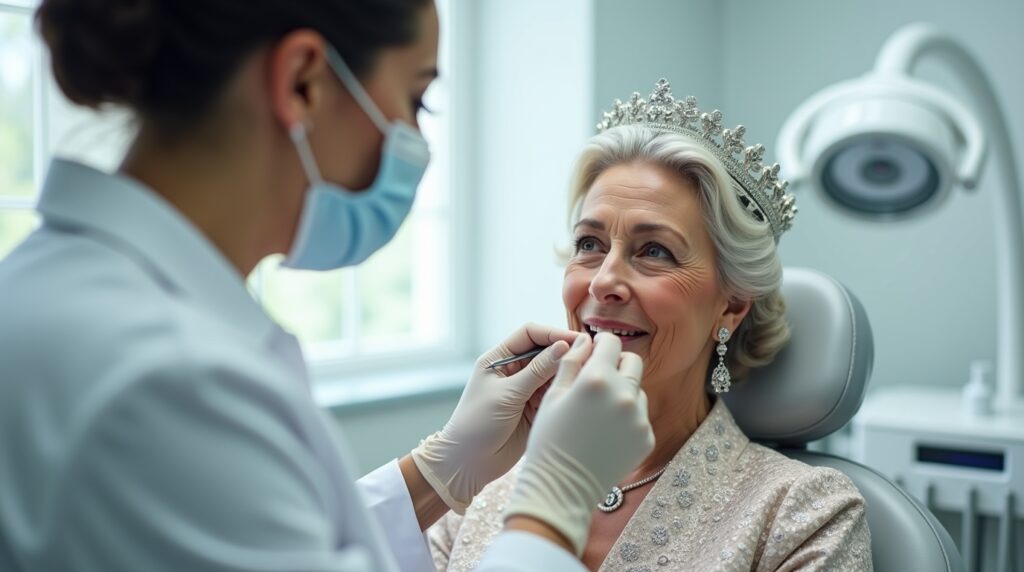
At Teeth Care Centre, we are deeply humbled and profoundly honoured to be entrusted as the dental custodians to some of the most distinguished royal lineages of India. It is both a privilege and a sacred responsibility to serve those whose heritage is etched in the annals of history and whose legacy continues to inspire generations.
With utmost reverence, we extend our sincerest gratitude to the exalted Kings and Queens of India, the venerable Maharajas and Maharanis, the illustrious Monarchs and Crownheads of Rajasthan, the revered Majesties of Maharashtra, the esteemed Emperors of Gujarat, and the dignified Sovereigns of Madhya Pradesh.
We are equally honoured to serve the noble Royal Family of Mewar, the esteemed Royal House of Jodhpur, the eminent Imperial Family of Rajkot, the venerable Dynasty of Vadodara, and the gracious Queen Mother of Jaipur. Their continued trust in our expertise is a testament to our unwavering commitment to excellence, discretion, and clinical mastery.
To be chosen as the dental caretakers for such eminent families is not merely a professional distinction, but a deeply personal calling—one that we uphold with integrity, sensitivity, and absolute devotion. The grace and grandeur of these royal patrons inspire us to pursue perfection in every aspect of our care.
We offer our deepest thanks for the honour of your confidence. It is through your enduring trust that we are empowered to elevate the art and science of dentistry to regal standards worthy of your name and legacy.
Have you ever woken up gasping for air, or felt completely drained even after a full night’s sleep? If so, you’re not alone—and it could be a sign of sleep apnea, a common but often overlooked sleep disorder that affects millions of people worldwide.
What Is Sleep Apnea?
Sleep apnea is a condition where your breathing repeatedly stops and starts while you’re asleep. These pauses in breathing can last for a few seconds or longer and can happen dozens—or even hundreds—of times a night.
There are a few types of sleep apnea, but the most common is called obstructive sleep apnea (OSA). It happens when the muscles in the back of your throat relax too much, blocking your airway.
Why Should You Care?
Because untreated sleep apnea doesn’t just ruin your sleep—it can seriously affect your heart, brain, mood, and even your safety. People with sleep apnea are at higher risk of:
High blood pressure
Heart disease
Stroke
Type 2 diabetes
Car accidents due to drowsy driving
And the worst part? Most people don’t even know they have it.
Oral and Facial Clues Associated with Sleep Apnea:
Teeth grinding (bruxism) – A common response to night-time breathing issues
Worn, flattened, or cracked teeth
Receding gums or jaw tension
Scalloped tongue – Wavy edges from pressure against the teeth
Enlarged tongue, tonsils, or soft palate – These can physically narrow your airway
A small lower jaw (retrognathia) – A structural risk factor for airway blockage
Mouth breathing and dry mouth – Especially if chronic or present upon waking
Dentists are in a unique position to help identify sleep apnea because many of its signs are visible during a routine exam. Here’s how:
Worn-down teeth: Caused by night-time grinding (bruxism), which is often linked to sleep disturbances.
Small jaw or narrow palate: These anatomical features can contribute to airway obstruction.
Large tongue or tonsils: May block the airway when you lie down.
Scalloped tongue edges: A sign your tongue is pressing against your teeth, often due to struggling for air.
Also, Dr. Pankti Patel best dentist in Ahmedabad provide oral appliance therapy—a non-CPAP option for treating mild to moderate sleep apnea.
Signs and Symptoms of Sleep Apnea
You might not remember the breathing pauses during the night, but your body will definitely feel the effects. Here are some of the most common symptoms:
Night time Symptoms:
Loud snoring (often noticed by a partner)
Choking or gasping for air while sleeping
Frequent waking or restless sleep
Dry mouth or sore throat in the morning
Daytime Symptoms:
Feeling exhausted, no matter how long you slept
Morning headaches
Trouble concentrating or memory issues
Irritability or mood swings
Falling asleep during the day (even at work or while driving)
How Do You Know If You Have It?
If these symptoms sound familiar, you might have sleep apnea. But the only way to know for sure is to get tested—usually through a sleep study.
Options for Diagnosis:
At-home sleep test: A simple device that tracks your breathing and oxygen levels while you sleep in your own bed.
Overnight sleep study (polysomnography): A more detailed test done at a sleep clinic.
Your doctor or a sleep specialist can help you choose the best option.
What Can You Do About It?
Here are some common treatments:
CPAP machine: Delivers air through a mask to keep your airway open.
Oral appliances: Custom-made mouthpieces at Teeth Care Centre the best dental clinic in Ahmedabad that keep your airway from collapsing.
Lifestyle changes: Losing weight, avoiding alcohol, and sleeping on your side can help.
Surgery: In some cases, surgery may be recommended to remove tissue or correct airway issues.
Sleep apnea is more than just loud snoring—it’s a serious health condition that can quietly impact your life. If you’re constantly tired, snore heavily, or have other warning signs, don’t ignore them.
Talk to your doctor or a sleep specialist. A simple test could change the way you sleep—and live—for the better.
Root Canal Treatment (RCT) is a highly effective procedure for saving infected teeth. It involves removing the infected pulp tissue, thoroughly cleaning and shaping the canals, and sealing them to prevent future bacterial invasion. While RCT has a high success rate, re-infection can still occur, especially if certain factors compromise the quality of the treatment.
What Is Re-infection After RCT?
Re-infection refers to the return of bacteria inside the previously treated root canal. This may lead to persistent pain, swelling, or formation of an abscess. A reinfected tooth may require retreatment or, in more complex cases, surgical intervention or extraction.
Causes of Re-infection in RCT-Treated Teeth
1. Incomplete Cleaning of the Root Canal System
The success of root canal treatment heavily relies on how thoroughly the root canals are cleaned. Many teeth have complex canal anatomies with tiny branches or curved canals that are difficult to detect. If any portion of the canal remains uncleaned or unfilled, residual bacteria can survive and multiply, leading to reinfection.
Additionally, in some cases, a canal may be missed entirely, especially in molars with multiple roots. This untreated canal can harbour bacteria and cause symptoms to recur later.
2. Breakage of Instruments during Cleaning
During the process of cleaning and shaping the canals, thin metal files are used to remove infected tissue and shape the canal for filling. Occasionally, these files can break inside the canal—especially in narrow or curved canals. If the broken instrument cannot be retrieved and it blocks access to the remaining infected pulp or debris, bacteria may remain in the tooth and cause reinfection over time.
While not every instrument breakage leads to failure, it becomes a risk factor when it prevents complete cleaning and disinfection of the root canal.
3. Poor or Delayed Final Restoration
Once the canal is cleaned and filled, it’s critical to restore the tooth with a well-fitted filling or crown. A delay in this step, or a poorly sealed restoration, allows bacteria from saliva to re-enter the canal system—undoing all the work of the root canal.
4. Coronal Leakage or Crown Fractures
Over time, the protective crown or filling can develop micro leakage, cracks, or wear down. These tiny openings are enough for bacteria to re-enter and infect the sealed canal.
5. New Tooth Decay
If decay forms around the edges of a crown or filling, it can break the seal protecting the root canal system and lead to reinfection.
Signs of Re-infection
Be aware of these common signs:
Persistent or returning toothache
Swelling in the gums or jaw near the treated tooth
Formation of a pimple-like abscess on the gums
Sensitivity to pressure or temperature
Bad taste or odour in the mouth
Discoloration of the tooth
Early detection is key. Don’t ignore these signs—contact the best root canal specialist in Ahmedabad at Teeth Care Centre immediately if you notice them.
How to Prevent Re-infection
1. Ensure Thorough Root Canal Cleaning
Choosing an experienced root canal specialist can make a big difference, especially for teeth with complex root systems. Modern tools like microscopes, loupes and digital imaging help identify all canals and ensure complete disinfection.
2. Address Instrument Breakage Promptly
If an instrument breaks inside the canal, your dentist will assess whether it can be retrieved or bypassed. The key is to not leave the canal incompletely cleaned. The instruments (files) used to clean the canal must not be used multiple times to prevent its breakage.
3. Don’t Delay the Final Restoration
Ideally, a permanent crown should be placed within a few weeks of completing RCT. Delays increase the risk of contamination and reinfection.
4. Maintain Good Oral Hygiene
Brush twice a day, floss regularly, and attend routine dental check-ups. This helps prevent decay from forming around restorations and protects the tooth long term.
5. Avoid Hard Biting on the Treated Tooth
Especially before a crown is placed, avoid chewing hard foods on the RCT-treated tooth to prevent fractures or leakage.
Re-infection in RCT-treated teeth can be disheartening—but it’s often preventable with proper technique, careful monitoring, and good oral care. Incomplete cleaning, missed canals, or complications like instrument breakage are significant risk factors, but they can be minimized with advanced technology and specialist expertise at the best dental clinic in Ahmedabad, Teeth Care Centre.
If you suspect a previously treated tooth is bothering you again, don’t wait. Early diagnosis and retreatment can save the tooth and restore your peace of mind.