Teeth care Centre® Dental Hospital is the only hospital in Ahmedabad, India who is having well qualified Dental professionals and Master Degree Holders from different specialty field who are dedicated to restore your oral health beautifully. We have exceptional, Expert and eminent team of dentists includes pediatric dentist, Orthodontist and Endodontist, Prosthodontist, Oral Surgeon who works with team to ensure that our patients receive the most advanced dental care available in the world.

What is Pediatric Dentist or dentist for kids?
Well, in a nutshell, a pediatric dentist is a specialist who is dedicated to the oral health of children from infancy through the teen-age years. During this “growth” phase of a child, special approaches are needed in dealing with dental problems in order to avoid current and future dental problems. At Teeth care centre® Dental Hospital the pediatric dentist is best qualified to meet those needs. Children are only patients for pediatric dentist, and all our training is devoted to meeting their specialized needs.
If you believe your child needs emergency dental attention, then we provide emergency appointment and fast treatment with best possible dental care at their exact moment of need.
Maximum child comfort is our priority, so by giving proper time for counselling to parents and child both, we understand psychology of child to give maximum comfort and needs of parents for efficient treatment outcome.
Did you know pediatric dentists have an additional training to acquaint them with the special needs and remedies available to children?

Why to choose Teeth Care Centre® Dental Hospital for Pediatric Dentist?
8 Reasons to choose Teeth Care Centre® for your kids treatment
1. Choose surgeon who has received specialized degree to perform paediatric dental procedures with maximum accuracy and comfort.
2. Child Friendly Setup
3. Proper Counseling to Make Child Calm and Comfortable
4. No Life Threatening General Anesthesia Approach – World’s No. 1 Safest Conscious Sedation System
5. Painless injection system to make whole procedure painfree.
6. Painless and Bloodless Treatment by Lasers
7. Cosmetic Treatments for Kids
8. We have fixed price policy: Price is fixed and transparent.
* Many clinics often claim to have ultra-modern technology, please do not rely them right away. Instead, kindly check whether the equipment they use are a world-renowned brand or substandard.

Choosing a pediatric practice to trust with the health and beauty of your child’s smile is an important decision. Setting up your child’s first dental appointment can be confusing Making a positive first impression at the dentist can influence children’s view of dentistry for the rest of their lives, so it’s important to make sure your child is comfortable with the doctor and staff. You may wonder whether you should bring him to see a special pediatric dentist or just your regular dentist. Here are four reasons why to choose pediatric dentist. We at TCC strictly follow the protocols established by AAPD (American Academy of Pediatric Dentistry) which are considered as gold standard all over the world.
Specialization in Children’s Teeth: Pediatric dentists receive postdoctoral training in child psychology, behaviour modification, and pharmacology. Pediatric dentists also undergo yearly training and re-certification to stay current with the most recent developments in technology and patient care. They have been specifically trained to treat children’s developing teeth. They know the unique problems that children face, such as cavities and gum problems. They also understand the complexities of how teeth grow and develop and can keep an eye out for potential problems. Lastly, pediatric practitioners have experience dealing with frightened children and can help your child feel at ease and comfortable at the dentist.

Education for Parent and Child: A pediatric dentist educates parents and child by explaining preventive care, hygiene, and treatments in simple, easy-to-understand terms. Kid’s dentists also focus on prevention of dental problems to ensure lifetime of good dental health also gives you knowledge about developing healthy habits, like twice-a-day brushing and flossing. A pediatric dentist will also have the latest information on preventative treatments (such as topical fluoride treatments) as they pertain specifically to children.

Child-Friendly Equipment: While there’s nothing wrong with using standard-sized dental equipment on children, but Teeth Care Centre is designed in such a way that pediatric dentist will use smaller equipment specifically designed for a child’s mouth. Additionally, many pediatric dentists help ease your child into dental exams by introducing one piece of equipment at a time. This can help children get used to the complex and often “scary-looking” equipment without overwhelming them.
Comfortable Environment: It’s very important for your child to feel comfortable in our Dental Hospital. So Teeth care centre dental hospital Main goal and set up is to create a safe place with a fun atmosphere for your child to enjoy. Specialized children’s dental practices are decked out in brightly-colored décor, to help your child feel more at home and also play popular children’s cartoons to distract your child during the exam.
They hand out stickers or toys at the end of the appointment to help build up your child’s level of comfort. Additionally, when your child sees other children having a positive dental experience, she can use this as a model to follow.


These are many areas of prevention and care that are unique to children whom the pediatric dentist is specifically trained to identify, treat and prevent. That is why many parents wisely choose a pediatric dentist for their child’s dental needs, just as they choose a pediatrician for their medical needs. Following Above were some important educational areas we’ve included in this section of our site for parents to understand how teeth care centre and team works.
Pediatric Treatments Available at Teeth Care Centre® Dental Hospital, Ahmedabad:
- Emergency Services: Pain, Swelling, Knocked Out Tooth
- Painless Laser Treatment
- Safe Sedation Dentistry
- Infant Examination
- Fluoride Application
- Pit and Fissure Sealants
- Filling and crowns
- Child Root Canal Treatment (RCT)
- Extractions
- Space Maintainer
- Habit Breaking Appliances
- Growth Modification Appliance
- Lip or Tongue Tie Correction
- Special Needs Pediatric Dentistry
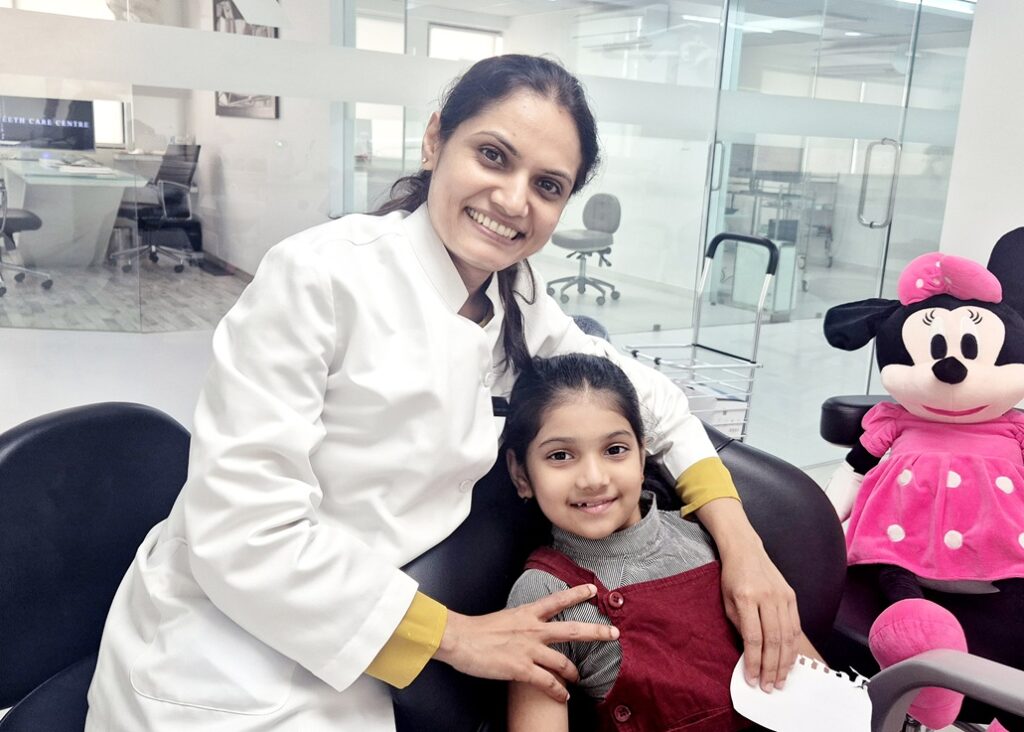
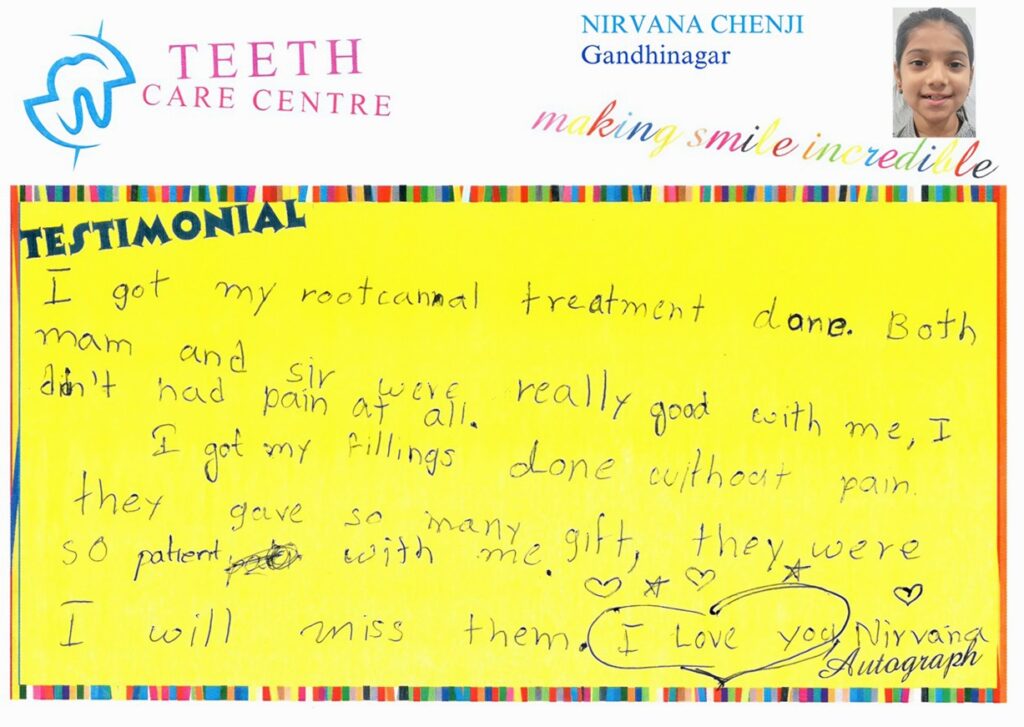
TESTIMONIAL:




Contact Us:
TEETH Care Centre® Dental Hospital, 2nd floor, Pushpak66, Near Someshwar Jain Temple, 132 feet ring road, Satellite, Ahmedabad, Gujarat, INDIA – 380015.
Call: +919377783384 | +917878783384
https://teethcarecentre.com/contact-us/
Slot Booking Charge (INR): 3000/-
How Dental Sealants Help Protect Children’s Permanent Teeth at a Pediatric Dentist in Ahmedabad
Dental sealants are an important preventive option offered by a Pediatric Dentist in Ahmedabad – Dental Clinic for Child Kids Toddler, particularly for children whose back teeth have deep grooves and pits. The chewing surfaces of molars naturally contain narrow areas where food particles and plaque can collect. Young children may find these areas difficult to clean thoroughly with a toothbrush. Because of this, molars can become vulnerable to cavities soon after they erupt. A dental sealant is a thin protective coating applied to selected grooves to create a smoother surface that is easier to keep clean. The procedure is generally quick and does not require drilling when the tooth is healthy and suitable for sealing. The dentist first cleans and prepares the tooth before carefully applying the sealant material. Once placed, the material is hardened using a curing light. Sealants are particularly useful during childhood because newly erupted permanent molars may remain at increased risk while children are still developing effective brushing habits. They do not replace brushing, flossing, fluoride exposure, or regular dental examinations. Instead, they provide an additional layer of protection in areas that are naturally difficult to clean. The pediatric dentist evaluates each child’s cavity risk before recommending sealants because not every tooth requires the procedure. Children with frequent cavities, deep fissures, or difficulty maintaining plaque control may benefit more significantly. Sealants can wear or chip over time, so their condition should be checked during routine dental visits. If a sealant becomes damaged, it can often be repaired or replaced after professional assessment. Parents should also understand that sugar frequency remains an important factor in childhood cavity development. Limiting frequent sugary snacks and sweetened drinks can significantly support the benefits of preventive dental care. Fluoride toothpaste appropriate for the child’s age should continue to be used under parental supervision. A Pediatric Dentist in Ahmedabad – Dental Clinic for Child Kids Toddler combines sealants with regular examinations, preventive education, fluoride guidance, and professional cleaning to create a broader cavity-prevention strategy. Early protection of permanent molars can reduce the likelihood of restorative treatment later and help children maintain healthier teeth throughout their growing years.